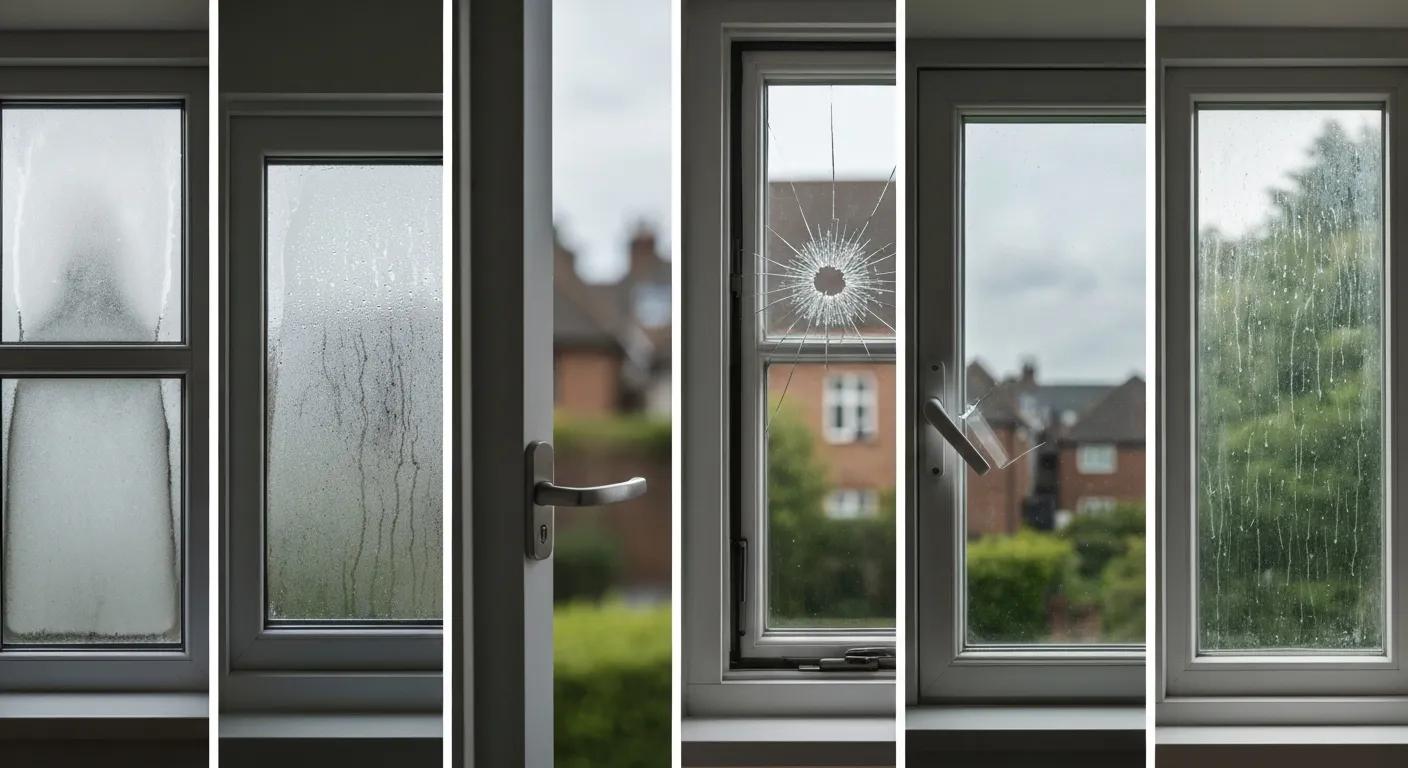
Windows across Sussex endure a particular set of stresses — salt from the coast, changing humidity and everyday mechanical wear — which makes a handful of faults especially common. This guide runs through the five issues we see most often, shows you how to recognise them, and explains the repair-first options that save you money, restore security and recover energy performance. You’ll learn to spot misted or blown double glazing, identify faulty locks, diagnose hinge problems, locate drafts and failed seals, and know when cracked glass needs immediate attention. Each section includes simple checks you can do yourself, typical repair paths, and clear signals for when to call a professional. By the end you’ll be better placed to weigh repair versus replacement, take short-term protective steps, and understand which local conditions in Sussex speed up specific failures.
Misted or “blown” double glazing happens when the perimeter seal of a sealed unit fails and moisture gets between the panes. That moisture saturates the desiccant, forms visible condensation and reduces the unit’s insulating performance — which means poorer visibility and more heat loss. Catching a blown unit early usually lets us replace the sealed unit while keeping the original frame, avoiding the extra cost and embodied carbon of a full-frame renewal. Below we offer straightforward checks to confirm misting, then explain the technical causes and the Sussex-specific factors like salt-laden air and frequent temperature swings.
Start with a visual check: look for condensation trapped between the panes that doesn’t clear when you heat or ventilate the room, or for a cloudy, diffuse patch across the glass. A useful quick test is to see whether the moisture appears in the cavity (between panes) rather than on the room side — cavity condensation means the sealed unit has likely failed. Note whether the misting is constant or only follows humid weather, and inspect the glass edge for discolouration or staining. If you find these signs, take photos and record dates — that helps a surveyor diagnose deterioration and recommend either pane replacement or resealing.
These basic checks lead naturally into assessing causes and repair choices.
A sealed unit depends on an unbroken perimeter seal and a desiccant-filled spacer to stay dry; over time UV, repeated thermal cycling, knocks or defects can produce micro-cracks that let moisture in. In Sussex, coastal salt speeds up seal breakdown and can corrode metal spacers, while wide day–night temperature swings stress sealants and shorten their life. Age matters too: many sealed units show problems after a decade or more, especially in exposed locations. When we advise repair versus replacement, the usual cost-effective first step is replacing the sealed unit (pane replacement) while keeping a sound frame — that preserves the look of your window and reduces waste compared with full-frame renewal.
Before the table below, bear these typical diagnostic outcomes and common repairs in mind.
The following table compares common causes, visible symptoms, and recommended repair actions for misted or blown glazing.
In many cases replacing just the sealed unit restores performance and keeps the existing frame — a lower-cost, lower-carbon outcome compared with full replacement.
Repairing a blown unit preserves the frame and improves energy efficiency. The next section looks at typical repair routes and when to opt for professional replacement.
Faulty window locks are a security risk and can affect insurance cover, so it’s important to diagnose them quickly. A failing lock might feel stiff, fail to fully engage its locking points, or have a cylinder that won’t turn. These are often down to mechanical wear, internal corrosion or slight misalignment from frame movement. A few basic user checks — turning the key, feeling for handle wobble and watching whether all locking points engage — will tell you whether it’s a maintenance job or something needing a fitter. The H3 below lists common signs, and the following section explains why a professional repair matters for Sussex homes, especially where coastal corrosion is a factor.
These faults create immediate security concerns because incomplete engagement reduces resistance to forced entry. Homeowners can try non-corrosive lubricant on moving parts and tighten visible fixings, but lubrication is usually temporary if corrosion or worn parts are the cause. If the fault persists or the window is ground-floor or easily accessible, arrange a professional assessment straightaway.
A professional repair gets the correct replacement parts and a calibrated fit for your specific window system — vital because the wrong hardware can compromise security and insurance compliance. Sussex Glazing Solutions specialises in repairing and replacing locks, handles and associated parts without forcing a full-frame replacement, which keeps costs down and maintains the window’s appearance. In coastal areas we also address corrosion that weakens mechanisms and can recommend corrosion-resistant parts or protective measures. For urgent security faults or insurance-sensitive work, a professional repair restores reliable locking action and provides the documentation most insurers expect.
Hinge problems usually show as stiff operation, sagging sashes, poor sealing or rubbing — all of which reduce weatherproofing and increase draughts. Corrosion, dirt build-up, mechanical wear and frame misalignment each produce specific symptoms that disrupt seal compression and locking. A professional inspection identifies whether cleaning, lubrication and adjustment will fix the issue or whether hinge replacement and frame realignment are needed. The sections below explain how corrosion develops and the practical repair steps glazing specialists typically use.
Corrosion roughens hinge surfaces and fixings, increasing friction until the hinge seizes or the sash droops, which prevents the window from compressing seals and locking correctly. In Sussex, salt-laden air speeds this process and can pit hinge pins and brackets; the resulting uneven wear leads to misalignment. Early-stage problems often respond to cleaning, lubrication and a protective coating; advanced corrosion usually requires hinge replacement and inspection of the surrounding frame fixings. We recommend inspections every 12–24 months for coastal properties to catch wear before it becomes a failure.
Repairs range from cleaning and lubricating pivot points and tightening fixings, to replacing hinge assemblies or reinforcing frame mountings where fixings have widened. Typical workflow is: inspect hinge and frame, test sash alignment, clean and lubricate, try adjustment, then replace parts if needed — this keeps downtime short and preserves the original frame where possible. Replacement hinges are selected to match the window system and, for coastal locations, have corrosion-resistant finishes to delay recurrence. Combined hinge replacement and seal renewal often restores weatherproofing and smooth operation without the cost of a full unit replacement.
The hinge problem table summarises symptoms and repair choices.
That table helps you prioritise repairs and shows when a professional fitter should be called in.
Fixing hinges usually improves sealing too, which prepares the window for the draught and seal work covered next.
Drafty windows and failed seals lower thermal efficiency, push up heating bills and can create cold spots and condensation that encourage mould. Diagnosis begins with simple tests and moves to targeted repairs. Heat loss through windows happens through conduction across the glass, convection through gaps and infiltration at failed seals — identifying which path applies tells you the right repair. Below we explain common causes, quantify likely energy improvements after repairs, and put this in the context of Sussex’s maritime climate and a repair-first approach.
Drafts come from failing seals, gaps at the frame-to-wall junction, warped or misaligned sashes, poor glazing and single-pane units with little insulation. Heat transfer follows three routes: conduction through the glazing, convection through gaps and leakage, and radiation from older glass — and all get worse as seals break down and frames deform. Sussex’s coastal climate speeds seal deterioration and can make timber swell or uPVC creep, creating gaps. Quick home checks include a smoke or candle test to spot airflow, feeling for cold spots around frames, and comparing the room’s comfort with vents and windows closed.
Repairing seals, replacing blown units and draught-proofing frames reduces uncontrolled airflow and restores insulating performance, often cutting heat loss noticeably for affected windows and lowering energy use. Improvements depend on the defect, but fixing several problem windows can cut overall heating demand by a measurable amount and reduce bills and carbon emissions. Repair-first choices — such as replacing a sealed unit instead of a whole frame — preserve embodied carbon and frequently offer a faster payback than a full replacement. Sussex Glazing Solutions provides free surveys and quotes focused on energy-saving repairs, helping homeowners target the interventions that deliver real comfort and environmental benefit.
Targeted repairs recover thermal performance and usually justify getting a professional survey or measurement to prioritise work.
Next we explain when cracked or broken glass requires replacement.
Cracked or broken panes are an immediate safety and security issue and can let water into the building, so replacement is usually urgent. The decision depends on severity and location: full-length cracks, shattered panes or damage that compromises the unit’s structure need prompt replacement, while small edge chips can sometimes be managed temporarily with protective glazing or boarding. Insurers and building-safety rules often demand quick replacement for ground-floor or accessible windows. The subsections that follow describe the immediate risks and a professional replacement workflow that prioritises safety, weatherproofing and a repair-first approach where possible.
Broken or cracked glass risks cuts and falling shards, creates an easier entry point for intruders, and allows wind-driven rain into the building fabric, which can cause internal damage. Cracked panes also lose thermal performance and can accelerate local condensation and mould. Short-term measures include cordoning off the area, keeping children and pets away, and using temporary boarding or glazing until professionals can replace the glass. Urgent cases — major breakage or glazing in a main access route — should be prioritised for immediate professional attention to remove safety hazards.
We follow a repair-first replacement workflow starting with a free survey and quote: measure the unit, check specifications and confirm whether a sealed-unit swap or single-pane replacement will restore performance while keeping the frame. Our process typically includes an onsite survey to confirm glass type and safety requirements, ordering or cutting the replacement pane, safe removal of the damaged glass, and expert installation with correct sealing and finishing to reinstate weatherproofing and security. Wherever feasible we repair individual components — glass, hinges, locks and seals — rather than replace entire frames, which saves time, cost and embodied carbon. Clear communication during the quote and survey helps you plan for lead times and any temporary protection needed.
Safe, efficient pane replacement reduces downtime and gets your home back to comfort — which is why a local repair-first specialist often makes the most sense.
Sussex Glazing Solutions is a local, repair-first glazing specialist working across Sussex. We fix blown double glazing, repair hinges and locks, and replace glass while prioritising cost-effectiveness and reduced waste. Our local experience covers coastal corrosion issues common around Brighton, Hove, Lewes, Worthing, Eastbourne and Burgess Hill, so we can recommend corrosion-resistant parts and maintenance suited to maritime exposure. Our service includes free surveys and honest quotes focused on repairing panes, hinges and locks rather than replacing full frames whenever that’s practical — which cuts both immediate costs and the carbon footprint of work. If you want targeted repairs that improve security and energy performance, our local knowledge and repair-first approach give a practical route to restoring windows without unnecessary replacement.
Repairing individual parts — sealed units, hinges, locks, handles and gaskets — usually costs a fraction of a full-frame replacement because you avoid bespoke frame labour and materials and retain serviceable frames. Repair-first work preserves existing fabrication, reduces waste and lowers embodied carbon from new frames and disposal; it also tends to be quicker. Financially, sealed-unit swaps or targeted hinge and lock repairs often have a shorter payback through lower heating bills and by avoiding a large capital outlay. Choosing repairs where the structure permits balances short-term budget needs with longer-term performance.
We combine local knowledge of Sussex coastal conditions with a broad repair portfolio — sealed-unit replacement, hinge and lock repairs, and glass replacement — and we avoid full-frame renewals unless genuinely needed. Our process centres on free surveys and clear, repair-focused advice that aims for durable fixes to restore energy efficiency, security and appearance. For homeowners who want documented assessments and a sensible, repair-first recommendation, a local specialist can offer tailored options that consider both cost and environmental impact. To get started, arrange a survey or request a quote and we’ll put together a practical plan for the specific issues you’ve found.
Lists: practical quick-references for homeowners
These quick-reference lists give practical steps you can take immediately and point to when to call a professional for persistent or safety-critical problems.
This guide has set out simple diagnostic checks, typical repair workflows, the energy and safety rationale for repairs, and the benefits of a local, repair-first approach in Sussex. Use the checks, tables and lists above to prioritise work and request a professional survey when issues go beyond DIY fixes.
Regular maintenance is the most effective way to extend window life. Check seals and frames for wear, clean hinges and locks, and treat exposed metal with protective coatings to limit corrosion. Use weatherstripping to reduce drafts and improve insulation, and deal with any signs of moisture or condensation promptly. For coastal properties, a professional inspection every 12–24 months helps catch issues early and keeps windows functioning well.
You can make meaningful energy savings without full replacement. Reseal gaps around frames, add draught-proofing and consider thermal window film to reduce heat loss. Heavy or thermal-lined curtains and blinds also help. If you have double glazing, replacing any blown sealed units will significantly boost performance. These measures often lower bills while retaining your existing window frames.
Act quickly. Find the source — failed seals, poor drainage or a roof leak — and dry the area to prevent mould. Remove damaged materials and repair or replace compromised seals or frames. If the damage is extensive or the cause isn’t obvious, call a professional for an assessment and a repair plan. Early action prevents larger structural issues later.
Yes. PVCu (uPVC) and fibreglass resist corrosion and need less maintenance, making them good choices for coastal settings. Aluminium with a protective coating is also durable. Timber looks attractive but requires regular treatment and protection against rot and salt damage. Choose materials that balance durability and maintenance for your location.
For most homes, a professional inspection every 12 to 24 months is sensible — more frequently in exposed coastal locations. Regular checks spot seal failures, corrosion or mechanical wear early and let you plan cost-effective repairs before problems escalate.
A local specialist understands the specific challenges of the area — salt spray, humidity and typical building styles — and can recommend materials and protective measures that work here. Local teams usually favour repair-first solutions that save money and reduce waste, know local building regulations, and can respond quickly when urgent work is needed. Their local reputation also gives extra reassurance about quality and service.
Dealing with common window problems in Sussex improves safety, comfort and energy efficiency while extending the usable life of your windows. By recognising signs like misted glazing, faulty locks and draughty frames you can take sensible, cost-effective steps — and a local repair-first specialist will help you choose repairs that protect both your budget and the environment. To move forward, book a professional survey and get a clear, repair-focused plan for your windows.
Sussex Glazing Solutions - Mobile Sticky Bar (WordPress Snippet)